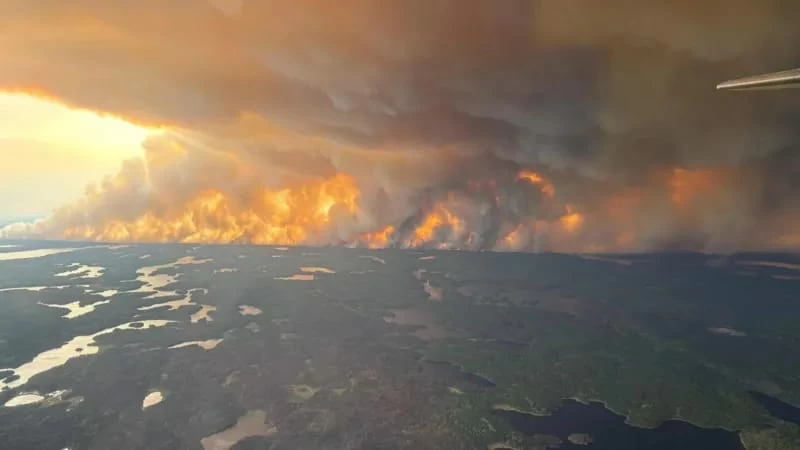
تواصل مئات حرائق الغابات المشتعلة في كندا إطلاق كميات هائلة من الدخان الكثيف، الذي امتد إلى شمال شرق الولايات المتحدة، متسبباً في تدهور حاد لجودة الهواء في عدد من المدن الكبرى، وسط تحذيرات صحية للسكان، وعمليات إجلاء واسعة، وتصاعد التوتر السياسي بين واشنطن وأوتاوا.
وسجلت مدن تورونتو ونيويورك وواشنطن العاصمة، اليوم (السبت)، واحدة من أسوأ مستويات جودة الهواء في العالم، وفق مؤشرات رصد تلوث الهواء، ما دفع السلطات المحلية إلى مطالبة السكان بتجنب الأنشطة الخارجية والحد من التعرض للدخان، لما يشكله من مخاطر صحية.
955 حريقاً نشطاً وإجلاء مجتمعات كاملة
وبحسب المركز الكندي المشترك لمكافحة حرائق الغابات، لا يزال 955 حريقاً نشطاً في أنحاء كندا، من بينها نحو 200 حريق في مقاطعة أونتاريو.
كما اندلعت أكثر من 12 بؤرة حريق على امتداد الحدود الشمالية لولاية مينيسوتا الأمريكية، التهمت أكثر من 73 ألف فدان، فيما وصفت السلطات الوضع بأنه «غير مسبوق»، وأعلنت حالة الطوارئ لتسريع جهود الإطفاء.
وفي شمال أونتاريو، التهمت النيران أجزاء واسعة من المناطق القريبة من بحيرة سوبيريور والمتنزهات الوطنية ومجتمعات السكان الأصليين، فيما صدرت أوامر بإجلاء ستة تجمعات سكنية بعد تضرر منازل ومنشآت.
وأكد ماثيو هوبي، قائد عمليات الطوارئ في مجتمع نامايجوسيساجاجون فيرست نيشن، أن الحرائق دمرت المجتمع بالكامل تقريباً، مشيراً إلى أن السكان اضطروا إلى الفرار عبر قوارب صغيرة مع اقتراب ألسنة اللهب، دون تسجيل وفيات أو إصابات مباشرة.
موجة حر وجفاف وراء تفاقم الأزمة
ويرجح خبراء من المركز الوطني الأمريكي للتنسيق بين الوكالات لمكافحة الحرائق وهيئة الموارد الطبيعية الكندية أن موجة الحر الشديدة التي ضربت شمال أونتاريو نهاية يونيو، إلى جانب انخفاض معدلات الأمطار، كانت السبب الرئيسي في اتساع رقعة الحرائق.
وأوضح الخبراء أن ما يعرف بـ«القبة الحرارية» أدى إلى احتجاز الهواء الساخن والدخان فوق المنطقة، بينما تسبب الجفاف في تحويل الغطاء النباتي إلى وقود سريع الاشتعال، فيما ساعدت الرياح والعواصف على انتشار النيران والدخان لمسافات بعيدة.
سحب الدخان تغطي مدناً كبرى
وأظهرت صور الأقمار الصناعية أن الرياح دفعت الدخان جنوباً وشرقاً من أونتاريو نحو تورونتو وولاية نيويورك وصولاً إلى بوسطن.
وصنفت شركة IQAir المتخصصة في مراقبة جودة الهواء مدن تورونتو ونيويورك وواشنطن ضمن أكثر مدن العالم تلوثاً، فيما شهدت مدن مثل مينيابوليس وديترويت تحسناً نسبياً بعد أن كانت ضمن الأسوأ خلال الأيام الماضية.
ويحذر خبراء الصحة من أن دخان الحرائق يحتوي على جسيمات دقيقة للغاية مثل PM2.5 وثاني أكسيد النيتروجين، وهي ملوثات قادرة على اختراق الرئتين والتسبب في التهابات ومضاعفات صحية خطيرة.
وقال مفوض الصحة في ولاية نيويورك، جيم ماكدونالد، إن هذه الجسيمات تصل إلى أعماق الجهاز التنفسي وتسبب التهابات قد تؤثر في صحة الإنسان بشكل مباشر.
كما تؤكد منظمة الصحة العالمية أن التعرض لهذا الدخان قد يؤدي إلى تفاقم أمراض الجهاز التنفسي والقلب والكلى والعينين، مع ارتفاع مستوى الخطورة لدى الأطفال وكبار السن والمصابين بالأمراض المزمنة وفرق الطوارئ.
توصيات صحية للسكان
أصدرت السلطات المحلية سلسلة من الإرشادات، أبرزها؛ تجنب ممارسة الأنشطة البدنية المجهدة في الهواء الطلق، البقاء داخل المنازل وإغلاق النوافذ، ارتداء كمامات N95 أو KN95 المعتمدة، مراجعة الطبيب فوراً عند الشعور بضيق التنفس أو الصفير أو آلام الصدر.
كما حذرت من انتشار نسخ مقلدة من الكمامات عبر الإنترنت، داعية إلى استخدام المنتجات المعتمدة فقط، في وقت بدأت مدن عدة توزيع الكمامات مجاناً وتفعيل خطط الطوارئ الخاصة بتلوث الهواء.
توتر سياسي بين واشنطن وأوتاوا
ولم تقتصر تداعيات الحرائق على الجانب البيئي، إذ أشعلت أيضاً خلافاً سياسياً بين الولايات المتحدة وكندا.
فقد هدد الرئيس الأمريكي دونالد ترمب بفرض رسوم جمركية جديدة على كندا، معتبراً أن بلاده تتحمل «تكلفة لا يمكن حسابها» بسبب الدخان القادم من الحرائق، واتهم أوتاوا بـ«الإهمال المتعمد» في إدارة الغابات.
وجاءت تصريحات ترمب بعد رسالة وجهها أربعة نواب جمهوريين من ولاية ميشيغان إلى رئيس الوزراء الكندي مارك كارني، طالبوا فيها باتخاذ إجراءات عاجلة للحد من آثار الحرائق، معتبرين أن «الرئة الأمريكية تدفع ثمن التقاعس الكندي عاماً بعد عام».
في المقابل، شدد كارني على أن البلدين يتحملان مسؤولية مشتركة في مواجهة تغير المناخ، بينما أكد رئيس وزراء أونتاريو دوغ فورد أن اتهام كندا بالتقصير «أمر غير مقبول»، مذكراً بأن فرق الإطفاء الكندية شاركت العام الماضي في مكافحة حرائق كاليفورنيا، مضيفاً: «هكذا يتصرف الجيران.. يقدمون المساعدة بدلاً من تبادل الاتهامات».
كما أشار خبراء إلى أن الدخان لا يعترف بالحدود السياسية، وأن الرياح تنقل الملوثات بين البلدين في الاتجاهين، وهو ما حدث أيضاً خلال حرائق كبرى شهدتها الولايات المتحدة في السنوات الماضية.
هل تتحسن الأوضاع قريباً؟
ويتوقع خبراء الأرصاد أن تبدأ جودة الهواء في تورونتو ونيويورك وواشنطن بالتحسن تدريجياً مع هطول الأمطار وتغير اتجاه الرياح، لتنخفض مستويات التلوث من فئة «غير صحي» إلى «متوسط» خلال الساعات القادمة.
لكن المخاوف لا تزال قائمة بشأن استمرار تأثير الدخان على نهائي كأس العالم المقررة إقامته في ملعب «ميتلايف» بولاية نيوجيرسي، رغم أن التوقعات تشير إلى أن الأمطار قد تساعد في تحسين الأجواء قبل انطلاق المباراة.
وفي الوقت نفسه، تتوقع السلطات الكندية استمرار خطر اندلاع الحرائق بمستويات أعلى من المعتاد في أقاليم الشمال الغربي وأونتاريو وكيبيك خلال يوليو وأغسطس.
ويرى الخبراء أن حرائق الغابات أصبحت أكثر شدة في السنوات الأخيرة بفعل التغير المناخي، إذ أتت حرائق 2023 على نحو 15 مليون هكتار، بينما التهمت حرائق 2025 حتى الآن أكثر من 8.3 مليون هكتار، مع توقعات باستمرار المخاطر في ظل ارتفاع درجات الحرارة وتراجع الغطاء الثلجي وزيادة موجات الجفاف.
Hundreds of wildfires raging in Canada continue to release massive amounts of thick smoke, which has spread to the northeastern United States, causing a sharp deterioration in air quality in several major cities, amid health warnings for residents, widespread evacuations, and rising political tensions between Washington and Ottawa.
Today (Saturday), the cities of Toronto, New York, and Washington, D.C., recorded one of the worst air quality levels in the world, according to air pollution monitoring indicators, prompting local authorities to urge residents to avoid outdoor activities and limit exposure to smoke due to the health risks it poses.
955 Active Fires and Complete Community Evacuations
According to the Canadian Interagency Forest Fire Centre, there are still 955 active fires across Canada, including about 200 fires in Ontario.
Additionally, more than 12 fire hotspots have ignited along the northern border of Minnesota, consuming over 73,000 acres, with authorities describing the situation as “unprecedented” and declaring a state of emergency to expedite firefighting efforts.
In northern Ontario, flames have consumed large areas near Lake Superior, national parks, and Indigenous communities, with evacuation orders issued for six residential clusters after homes and facilities were damaged.
Matthew Hubie, emergency operations leader in the Namaygoosisagagon First Nation community, confirmed that the fires have nearly destroyed the entire community, noting that residents had to flee in small boats as the flames approached, with no reported fatalities or direct injuries.
Heat Wave and Drought Behind the Crisis
Experts from the U.S. National Interagency Fire Center and the Canadian Natural Resources Agency suggest that the extreme heat wave that hit northern Ontario at the end of June, along with reduced rainfall, was the primary cause of the expanding fires.
They explained that what is known as a “heat dome” trapped hot air and smoke over the region, while drought turned vegetation into highly flammable fuel, and winds and storms helped spread the flames and smoke over long distances.
Smoke Clouds Cover Major Cities
Satellite images showed that winds pushed smoke south and east from Ontario towards Toronto and New York State, reaching Boston.
IQAir, a company specializing in air quality monitoring, classified the cities of Toronto, New York, and Washington among the most polluted in the world, while cities like Minneapolis and Detroit saw relative improvements after being among the worst in recent days.
Health experts warn that wildfire smoke contains extremely fine particles such as PM2.5 and nitrogen dioxide, which are pollutants capable of penetrating the lungs and causing serious health complications and inflammation.
New York State Health Commissioner Jim McDonald stated that these particles reach deep into the respiratory system and cause inflammation that can directly affect human health.
The World Health Organization also confirms that exposure to this smoke can exacerbate respiratory, heart, kidney, and eye diseases, with increased risk levels for children, the elderly, and those with chronic illnesses and emergency responders.
Health Recommendations for Residents
Local authorities have issued a series of guidelines, including; avoiding strenuous physical activities outdoors, staying indoors and closing windows, wearing approved N95 or KN95 masks, and consulting a doctor immediately if experiencing shortness of breath, wheezing, or chest pain.
They also warned against the spread of counterfeit masks online, urging the use of only certified products, while several cities have begun distributing masks for free and activating emergency plans for air pollution.
Political Tensions Between Washington and Ottawa
The repercussions of the fires are not limited to the environmental side, as they have also sparked a political dispute between the United States and Canada.
U.S. President Donald Trump threatened to impose new tariffs on Canada, claiming that his country bears an “incalculable cost” due to the smoke coming from the fires, accusing Ottawa of “deliberate negligence” in forest management.
Trump’s remarks came after a letter from four Republican representatives from Michigan to Canadian Prime Minister Mark Carney, urging urgent action to mitigate the effects of the fires, stating that “the American lung pays the price for Canadian inaction year after year.”
In response, Carney emphasized that both countries share a joint responsibility in addressing climate change, while Ontario Premier Doug Ford asserted that blaming Canada for negligence is “unacceptable,” reminding that Canadian firefighting teams participated last year in combating California fires, adding: “This is how neighbors behave… they offer help instead of exchanging accusations.”
Experts also pointed out that smoke does not recognize political boundaries, and winds carry pollutants between the two countries in both directions, as has also happened during major fires in the United States in recent years.
Will Conditions Improve Soon?
Weather experts expect air quality in Toronto, New York, and Washington to gradually improve with rainfall and changing wind directions, reducing pollution levels from “unhealthy” to “moderate” in the coming hours.
However, concerns remain about the continued impact of smoke on the World Cup final scheduled to take place at MetLife Stadium in New Jersey, although forecasts suggest that rain may help improve conditions before the match starts.
At the same time, Canadian authorities anticipate the continued risk of wildfires at higher-than-normal levels in the northwestern territories, Ontario, and Quebec during July and August.
Experts believe that wildfires have become more severe in recent years due to climate change, as the 2023 fires have burned approximately 15 million hectares, while the 2025 fires have consumed over 8.3 million hectares so far, with expectations of ongoing risks amid rising temperatures, declining snow cover, and increasing drought waves.